Kenya safari park
Massive elephant herds with Mount Kilimanjaro behind them.
Amboseli National Park sits in the rain shadow of Mount Kilimanjaro on Kenya's border with Tanzania, about 240 km southeast of Nairobi (a 4-hour drive). At roughly 392 km² it is small by East African standards, but the combination of permanent swamps fed by Kilimanjaro's snowmelt and a backdrop of Africa's tallest peak (5,895 m) makes it one of the continent's most photogenic safari destinations.
Amboseli is famous worldwide for its elephants. The park supports several research-tracked super-herds of 50+ animals, including some of the largest tuskers left in Africa. The Amboseli Elephant Research Project — running since 1972, the longest continuous elephant study in the world — has identified more than 1,500 individuals by name.
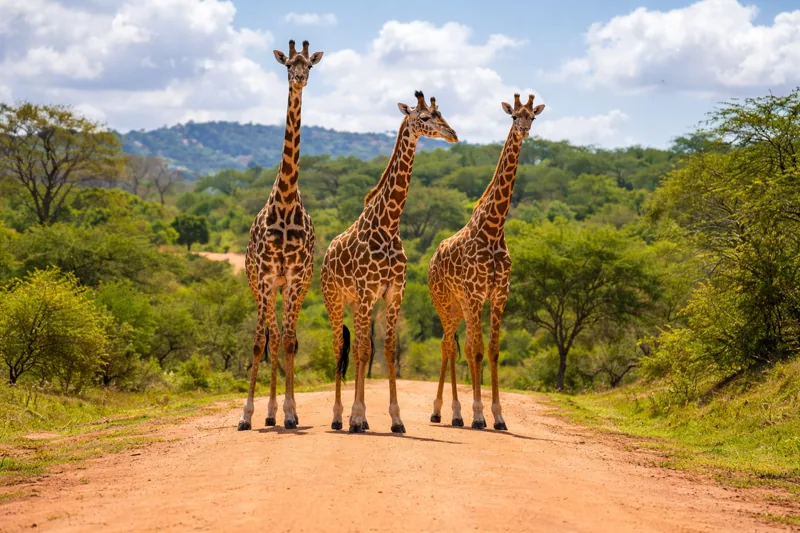
Beyond elephants, Amboseli holds healthy populations of lions, cheetahs, giraffes, zebras, hippos and over 400 bird species drawn to its swamps and seasonal lakes. The dry, dust-blown landscape makes it superb for photography, particularly at dawn and dusk when Kilimanjaro is most likely to be cloud-free.
Peak (Jun–Oct, Jan–Feb): dry season, animals concentrate around the swamps, Kilimanjaro skies clearest. Avoid for photography (Mar–May, Nov): Kilimanjaro often cloud-shrouded; rains make some tracks impassable.
Multi-day Kenya safari packages that include Amboseli as part of their itinerary.
From $1,080 · 5 days · 4.47★

From $1,495 · 7 hours · 4.40★

From $2,000 · 5 days · 4.67★

From $1,230 · 4 days · 4.99★

From $2,180 · 5 days · 4.84★

From $1,800 · 6 days · 4.49★
Amboseli National Park is roughly 240 km southeast of Nairobi — about a 4 to 4.5-hour drive on the A104/C103 route, with a stop at Namanga or Emali. Some operators offer a 50-minute charter flight to Empusel airstrip for a premium fee.
Amboseli has the longest-running elephant research project in the world, started by Cynthia Moss in 1972. The permanent swamps fed by Kilimanjaro snowmelt sustain large family groups year-round, and the park has been actively protected from poaching, so it is one of the few places in Africa where you can still see fully-grown tuskers.
Yes — Kilimanjaro sits just across the border in Tanzania, but its 5,895 m peak dominates Amboseli's southern horizon on clear days. The mountain is most reliably visible at dawn (5:30–7:30 AM) and dusk (5:00–6:30 PM); midday clouds often hide it.
One full day plus an early-morning drive the next day is enough to see the major elephant families and (weather permitting) the Kilimanjaro shot. Most multi-park Kenya safaris allocate 2 nights to Amboseli.