Book your visit
Samburu safari tours
Multi-day Kenya safari packages that include Samburu as part of their itinerary.
Kenya safari park
Northern Kenya's "Special Five" — species you won't see in the Mara.
Samburu National Reserve sits in the semi-arid lowlands of northern Kenya, roughly 350 km north of Nairobi (a 6-hour drive or 1-hour scheduled flight to Samburu airstrip). At 165 km² it is smaller than the Mara, but its dry, river-cut, acacia-dotted landscape supports a completely different cast of wildlife.
Samburu is best known for the "Special Five" — five large mammals adapted to the arid north that you will not see in the Mara or Amboseli: Grevy's zebra (taller and narrower-striped than the common plains zebra), reticulated giraffe (bold geometric coat pattern), gerenuk (the long-necked "giraffe gazelle" that browses standing on its hind legs), beisa oryx (long, scimitar-horned antelope), and Somali ostrich (with blue-grey neck and legs). For repeat safari travellers who have already seen the Mara, Samburu is often the highlight of the second trip.
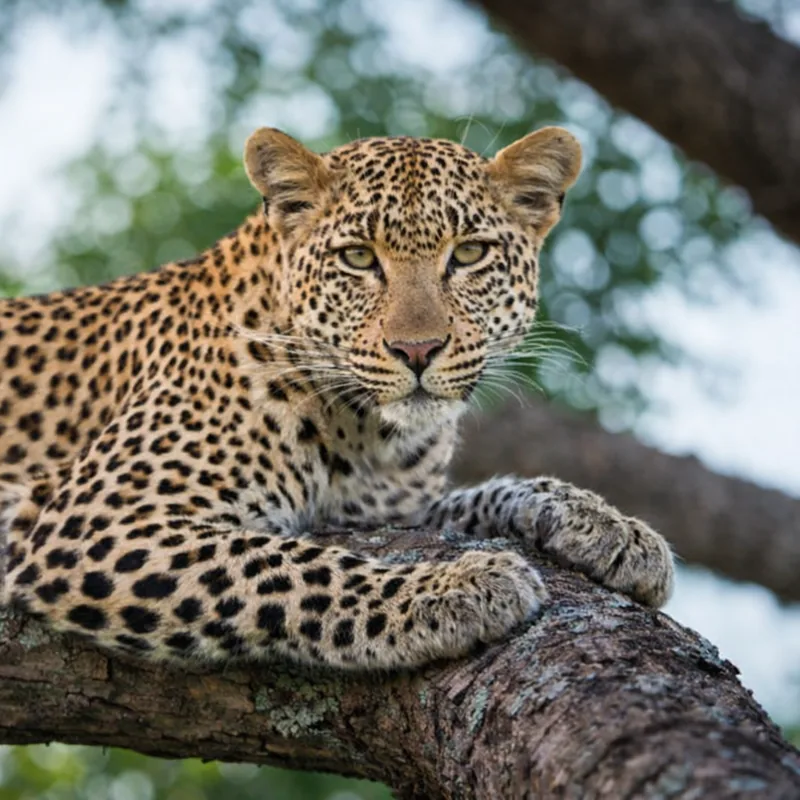
Beyond the Special Five, Samburu holds healthy populations of elephants, lions, leopards (sightings are reliable along the Ewaso Ng'iro River), Nile crocodiles, hippos and over 350 bird species. The neighbouring Buffalo Springs and Shaba National Reserves form a continuous protected ecosystem of about 540 km².
Peak (Jun–Oct, Jan–Feb): dry, animals concentrate along the Ewaso Ng'iro River. Shoulder (Nov, Dec): short rains, landscape briefly green. Avoid (Mar–May): long rains, some tracks impassable.
Samburu is commonly paired with Ol Pejeta Conservancy’s rhinos and the Aberdare highlands — forming northern Kenya’s classic rare-species circuit — or combined with the Masai Mara for a north-to-south Kenya safari. Browse northern Kenya safari packages:
Multi-day Kenya safari packages that include Samburu as part of their itinerary.
Samburu sits about 350 km north of Nairobi, just north of Mount Kenya, in the semi-arid lowlands of Samburu County. It is roughly a 6-hour drive on the A2 highway, or a 1-hour scheduled flight to the Samburu/Buffalo Springs airstrip.
The Samburu Special Five are five large mammals adapted to northern Kenya's arid landscape: Grevy's zebra, reticulated giraffe, gerenuk, beisa oryx and Somali ostrich. None of them are found in the Maasai Mara — which is why Samburu is the standard "second safari" destination after the Mara.
Yes — the reserve and the surrounding tourism circuit have a long, stable safety record. Travellers fly into Samburu directly or drive via Nanyuki, both well-trafficked routes. The Samburu County Council that co-manages the reserve has strong incentives to keep the tourism economy running smoothly.
Yes — many 7+ day Kenya safari packages combine Samburu with Ol Pejeta, Lake Nakuru and the Maasai Mara. Internal flights between Samburu and the Mara are available daily and avoid the long drive.