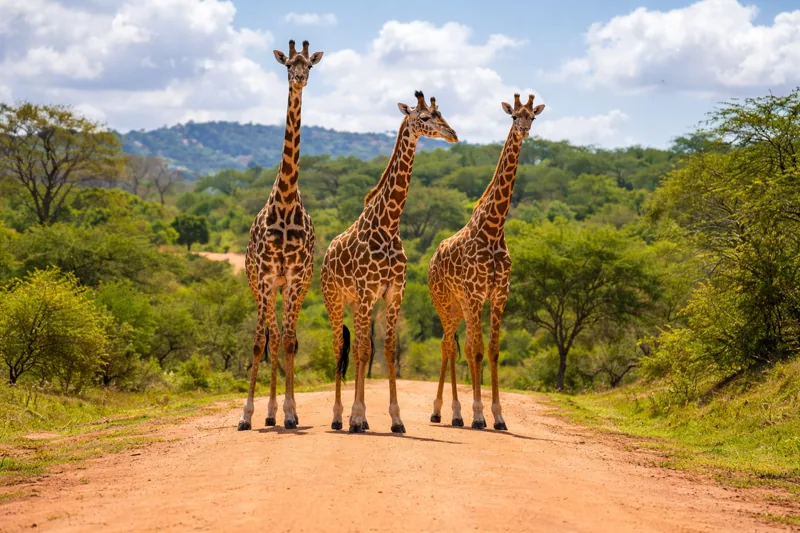
Kenya safari park

Tsavo East Safari

Kenya's largest national park — red-dust elephants and vast wide-open plains.

About

Tsavo East National Park — overview

Tsavo East National Park covers 13,747 km², making it Kenya's largest national park and one of the largest protected wildlife areas in East Africa. Set roughly halfway between Nairobi and Mombasa along the A109 highway, Tsavo East is the more accessible half of the combined Tsavo ecosystem (Tsavo West sits to its west, separated by the highway).

The park is famous for two things: red-coloured elephants and sheer scale. The "red elephants" are not a separate species — they take their colour from rolling and dust-bathing in the iron-rich red soil that covers much of the park. With over 12,000 elephants estimated in the Tsavo ecosystem, sightings of family groups crossing the Galana River or the open plains around Voi are routine.

Compared to the Maasai Mara, Tsavo East is wilder, quieter and far less crowded. Game viewing requires more patience because animals can be widely distributed across the enormous area, but the trade-off is genuine wilderness atmosphere — you may go an entire morning without seeing another vehicle. Tsavo is the standard safari destination for travellers based on the Kenyan coast (Diani, Mombasa, Watamu) thanks to the 3-hour drive from Mombasa to the Voi or Sala gates.

Tsavo East is best for travellers who want a classic Kenyan safari with huge open landscapes, red-dust elephants, lions, giraffes, buffalo and fewer crowds than some better-known parks. It is especially convenient for visitors staying on Kenya's coast, including Mombasa, Diani, Watamu and Malindi. A one-day safari is possible from some coastal areas, but a 2-day or overnight safari usually gives a better chance of relaxed wildlife viewing.

Timing

Best time to visit Tsavo East

Peak Shoulder Avoid

Peak Jun–Oct · Jan–Mar

Dry season — animals concentrate at waterholes and along the Galana River, and game-viewing tracks stay firm.

Shoulder Nov · Dec

Short rains turn the landscape green; excellent for photography and lower-season pricing.

Avoid Apr · May

Long rains; some lodges close and unsealed tracks turn muddy.

What you'll see

Wildlife & highlights

Book your visit

Tsavo East safari tours

Multi-day Kenya safari packages that include Tsavo East as part of their itinerary.

3 Days Nairobi to Amboseli to Tsavo East to Mombasa Safari

★ 5.0 3 days
$1,060 per person

Cross Kenya from Nairobi to the Indian Ocean coast — Amboseli's elephant herds against Mt Kilimanjaro, then Tsavo East's red-dust plains, ending in Mombasa.

Pоwered by GetYourGuide

3 Days Tsavo East and Saltlick Safari from Diani/Mombasa

★ 4.9 3 days
$945 per person

Pair Kenya's largest national park — Tsavo East — with the Taita Hills wildlife sanctuary, with a strong chance of seeing elephant herds, lions, leopards, cheetahs, buffalo and rhino.

Pоwered by GetYourGuide

3 Days 2 Nights Saltlick Safari from Diani/Mombasa

★ 4.8 3 days
$893 per person

Stay overnight at the iconic Salt Lick Safari Lodge in the Taita Hills wildlife sanctuary — built on stilts over an active waterhole that draws elephant, buffalo, zebra and big cats.

Pоwered by GetYourGuide

2-Day Tsavo East National Park Safari

★ 4.9 2 days
$360 per person

Discover Tsavo East on a 2-day safari from Mombasa, Diani, Watamu, Malindi or Kilifi — morning and afternoon game drives with an overnight stay inside the park.

Pоwered by GetYourGuide

Day Tour to Tsavo East National Park from Mombasa/Diani

★ 4.8 1 day
$355 per person

A one-day round trip into Tsavo East — red-dust elephants, rhino, buffalo, lion, leopard, hippo and crocodile, plus 500+ bird species across the open savannah.

Pоwered by GetYourGuide

From Mombasa/Mtwapa/Diani/Tiwi: Tsavo East Full-Day Safari

★ 4.3 143 reviews Full day
$200 per person

Day-safari into Tsavo East from the coast — game drives across the open plains and a return to your hotel the same evening. The most reviewed Tsavo day-trip on the platform.

Pоwered by GetYourGuide
Plan with confidence

Tsavo East FAQ

Is Tsavo East National Park worth visiting?

Yes, Tsavo East National Park is worth visiting, especially if you want a classic Kenyan safari with wide open landscapes, red-dust elephants, lions, giraffes, zebras, buffalo and fewer crowds than some of Kenya's more famous parks. It is also one of the most convenient safari options for travellers staying on the Kenyan coast, including Mombasa, Diani, Watamu and Malindi.

What is Tsavo East National Park famous for?

Tsavo East is famous for its vast dry landscapes, large elephant herds, red elephants covered in Tsavo's red dust, lions, buffalo, giraffes and open savannah scenery. It is one of Kenya's largest and oldest national parks and is often chosen by travellers who want a wilder, less crowded safari experience.

Can you see the Big Five in Tsavo East?

You can see several Big Five animals in Tsavo East, including elephants, lions, buffalo and sometimes leopards. Rhinos are not commonly seen in Tsavo East, so visitors should not expect a guaranteed Big Five safari. The park is better known for elephants, big landscapes and classic dry-country wildlife viewing.

Why are the elephants in Tsavo East red?

The elephants in Tsavo East look red because they bathe, roll and dust themselves in the park's red volcanic soil. Their skin is naturally grey, but the red earth gives them the distinctive colour that has made Tsavo's elephants famous.

How many days do you need for a Tsavo East safari?

A 2-day Tsavo East safari is usually a good choice for most visitors because it allows time for afternoon and early morning game drives. A one-day safari is possible from some coastal areas, but it can feel rushed. A 3-day safari gives a more relaxed experience and more time for wildlife viewing.

Can you do Tsavo East as a day trip from Mombasa?

Yes, Tsavo East can be visited as a long day trip from Mombasa, but many travellers prefer an overnight safari. A day trip gives you a taste of the park, while a 2-day safari usually gives better chances for wildlife sightings because you can enjoy game drives during the cooler morning and late afternoon hours.

Can you visit Tsavo East from Diani Beach?

Yes, many Tsavo East safaris start from Diani Beach. The journey is longer than from Mombasa because of the transfer from the south coast, so an overnight safari is usually more comfortable than a one-day trip. A 2-day Tsavo East safari from Diani is a popular option for beach-holiday travellers.

What animals can you see in Tsavo East National Park?

Common animals in Tsavo East include elephants, lions, buffalo, giraffes, zebras, impalas, gazelles, waterbucks, warthogs and many bird species. Leopards and cheetahs may also be present, but they are harder to spot. Wildlife sightings depend on the season, weather, route and time of day.

Is Tsavo East better than Tsavo West?

Tsavo East and Tsavo West offer different safari experiences. Tsavo East is better for wide open landscapes, red elephants and easier wildlife spotting in open terrain. Tsavo West is more varied and scenic, with hills, lava flows, springs and greener landscapes. Many travellers combine both parks if they have enough time.

Is Tsavo East better than Amboseli?

Tsavo East is better if you want vast landscapes, red elephants, fewer crowds and easier access from the coast. Amboseli is usually better if you want famous views of Mount Kilimanjaro and excellent elephant sightings in a more compact park. The best choice depends on your route, budget and safari style.

What is the best time to visit Tsavo East National Park?

The best time to visit Tsavo East is usually during the drier months, when animals are easier to spot around water sources and vegetation is less dense. The park can still be visited in greener months, but wildlife may be more spread out. Early morning and late afternoon game drives are usually the best times for sightings.

Is Tsavo East good for a first safari?

Yes, Tsavo East can be a good first safari, especially for travellers staying on Kenya's coast who want to add a safari without flying to the Masai Mara. It offers elephants, lions, giraffes, zebras and classic safari scenery, although wildlife can sometimes be more spread out than in smaller or denser parks.

Is a one-day Tsavo East safari worth it?

A one-day Tsavo East safari can be worth it if you have limited time and are staying near the coast. However, it involves a long travel day and less time inside the park. If your budget and itinerary allow, a 2-day safari is usually better because it includes more relaxed game drives and a stronger chance of seeing wildlife.

Is Tsavo East safe for tourists?

Tsavo East is generally safe for tourists when visited with a reputable guide or tour operator and when park rules are followed. Visitors should stay inside the vehicle during game drives unless the guide says otherwise, keep a safe distance from wildlife and follow advice from rangers, lodge staff and guides.

Is Tsavo East suitable for families with children?

Tsavo East can be suitable for families, especially on a private or well-paced safari. Children often enjoy seeing elephants, giraffes, zebras and other large animals. Families should consider travel time, heat, road conditions and lodge facilities before booking, as long game drives can be tiring for younger children.

What should I wear on a Tsavo East safari?

Wear light, comfortable clothing in neutral colours, a hat, sunglasses and comfortable shoes. A light jacket or fleece is useful for early morning game drives. Avoid very bright colours and bring sunscreen, insect repellent, a reusable water bottle, binoculars and a camera.

Where is Tsavo East National Park located?

Tsavo East National Park is located in southeastern Kenya, between Nairobi and the Kenyan coast. It is a popular safari destination for travellers coming from Mombasa, Diani Beach, Watamu, Malindi and Nairobi.

Should I book a private or group Tsavo East safari?

A private Tsavo East safari gives more flexibility with timings, stops and pace, which is useful for families, photographers and travellers who want a more comfortable experience. A group safari is usually cheaper, but the schedule may be less flexible and you may spend more time collecting or dropping off other guests.