Kenya safari guide

Amboseli National Park

Kenya's elephant capital — 2,065 elephants roaming dusty plains beneath the snow-capped dome of Kilimanjaro. Your complete 2026 planning guide.

Quick answer

Amboseli at a glance

Key Takeaways

  • What it is: a compact 392 km² national park in southern Kenya, world-famous as the finest place on Earth to watch huge free-ranging elephant herds — including rare super tuskers — set against the backdrop of Mount Kilimanjaro.
  • Getting there: about 240 km (4–5 hour drive) or a 35–45 minute flight from Nairobi; 2–3 nights is ideal.
  • Best time: the dry seasons — June–October and January–February — for concentrated wildlife around the swamps and the clearest Kilimanjaro views.
  • Entrance fee: in flux — KWS gazetted USD 90 per adult per day from October 2025 (up from USD 60); a High Court order temporarily suspended it, but the USD 90 rate is being charged in practice. Always verify before booking.
  • The elephants: 2,065 individually identified elephants at end-2025, monitored by the Amboseli Elephant Research Project since 1972. For more on the Kilimanjaro backdrop, see our Kilimanjaro safari guide.
Why Amboseli

Why visit Amboseli National Park?

Few images say "African safari" more instantly than a line of elephants crossing dusty golden plains beneath the snow-capped dome of Kilimanjaro. That picture is Amboseli. While the mountain provides the drama, Amboseli Kenya earns its reputation on the ground: this is arguably the best place in Africa to watch elephants up close, in large, relaxed family herds, at eye level.

Amboseli is Kenya's second-most-visited park after the Masai Mara, yet it feels refreshingly manageable. Its compact size means short driving times and high wildlife density — you can experience the essence of the park in two days, making an Amboseli safari one of the most rewarding short trips in East Africa.

Location & history

Amboseli National Park overview

Amboseli National Park lies in Kajiado County in southern Kenya, on the border with Tanzania and in the rain shadow of Mount Kilimanjaro. The park core covers 392 km² (151 sq mi), but it sits at the heart of a much larger ecosystem of roughly 8,000 km² spanning the Kenya–Tanzania borderlands, community conservancies and Maasai group ranches.

The name "Amboseli" comes from the Maasai word Empusel, meaning "salty, dusty place" — apt for the seasonal, largely dry pan of Lake Amboseli, which shimmers with dust devils and mirage in the dry months. Yet at the park's heart lie lush, permanent swamps — notably Enkongo Narok and Longinye/Olokenya — fed by underground water filtering down from Kilimanjaro's glaciers and forest catchment. This paradox of dust and water makes Amboseli uniquely wildlife-rich: the swamps draw animals in remarkable density year-round.

Amboseli was set aside as the Southern Reserve for the Maasai in 1906 and finally gazetted as a national park in 1974. UNESCO designated the wider area a Man and the Biosphere Reserve in 1991. Today it is managed by the Kenya Wildlife Service (KWS), working alongside the Amboseli Trust for Elephants, Big Life Foundation and the Maasai community.

Five habitats in one compact park

Amboseli packs remarkable variety into a small area:

  1. The dried-up bed of Lake Amboseli — a vast seasonal salt pan
  2. Wetlands and swamps — spring-fed, green year-round, the lifeblood of the park
  3. Open savanna plains — prime hunting ground for lion and cheetah
  4. Acacia woodlands — favoured by giraffe and browsers
  5. Rocky thornbush country — quieter, less-visited terrain
Land of giants

The elephants of Amboseli

If one thing defines Amboseli park, it is elephants. This is home to the Amboseli Elephant Research Project (AERP), the longest continuously running study of wild elephants in the world, founded in 1972 by Dr. Cynthia Moss and Harvey Croze. Now run under the Amboseli Trust for Elephants (ATE), the project's database contains every elephant identified over five decades — numbering over 4,000 individuals, including their births and deaths — and researchers can recognise entire families and name individuals on sight. That deep familiarity is what makes Amboseli globally unique.

The elephant population has recovered dramatically from a low of around 460 during the 1970s–80s poaching crisis. According to the Amboseli Trust for Elephants, the population at the end of 2025 stood at 2,065 individuals, all identified and monitored by ATE — boosted by more than 220 elephant births in a remarkable 2025 baby boom following recovery from the 2022–2023 drought. The population is unusual for its healthy, natural age structure — from newborn calves to matriarchs in their 60s, plus many bulls in their breeding prime.

Big tuskers and super tuskers

Amboseli is one of the last strongholds of the "super tuskers" — bull elephants whose tusks each weigh over 100 pounds (45 kg) and often nearly drag along the ground. The most legendary were Tim, who died of natural causes in 2020, and Craig, long considered one of the last great super tuskers, who died in the early hours of 3 January 2026 in the Olgulului community area adjacent to Amboseli, aged 54. With Craig's passing, only nine known super tuskers remain in the Amboseli ecosystem. Other notable tuskers include Tolstoy, Pascal, Per and up-and-coming bulls like Esau and Michael. These giants carry a rare genetic legacy, and their protection is central to why Amboseli matters far beyond tourism.

Elephants here live in matriarchal family groups led by the oldest, most knowledgeable female — a social structure that Amboseli research helped the world first understand.
Beyond elephants

Wildlife in Amboseli National Park

While elephants are the headliners, an Amboseli national park safari delivers far more. The park hosts between 50 and 80 mammal species:

Predators & large mammals

  • Lions — present, often seen hunting on the open plains
  • Cheetahs — favour the open lakebed and plains
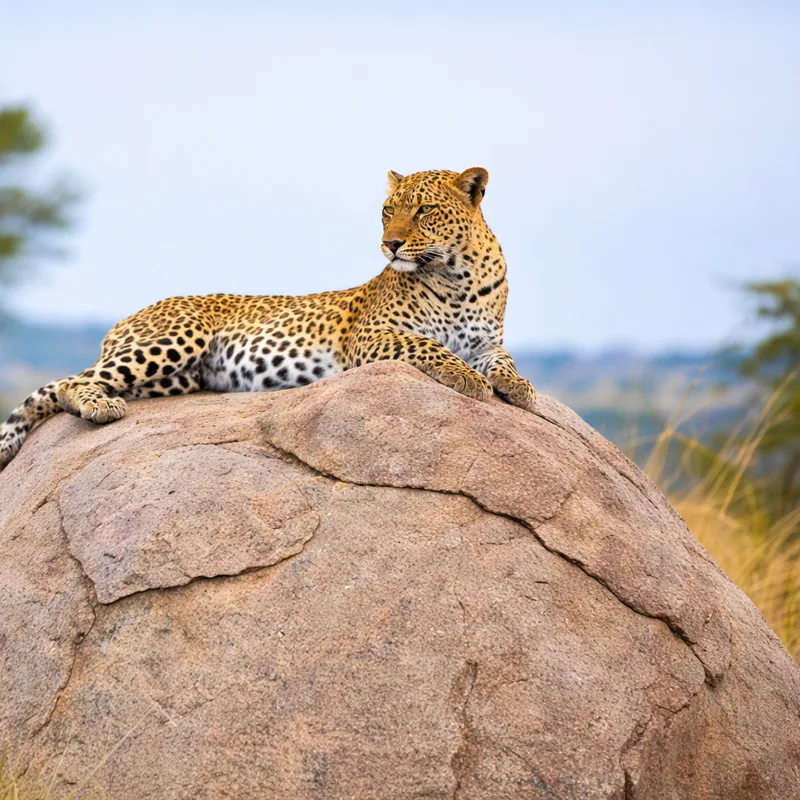
  • Leopards — present but elusive and rarely seen
  • Spotted hyena — an easy-to-find den exists in the park
  • Buffalo — abundant, especially around the swamps
  • Hippos — in the permanent swamps

Plains game & birds

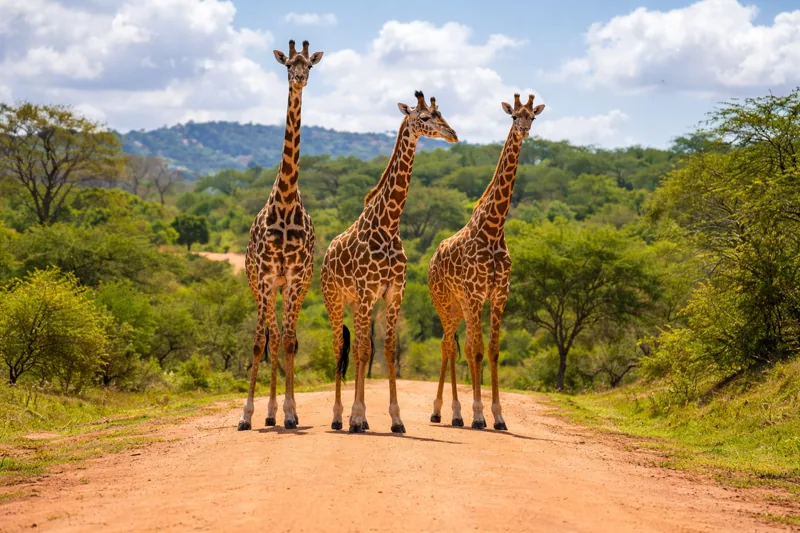
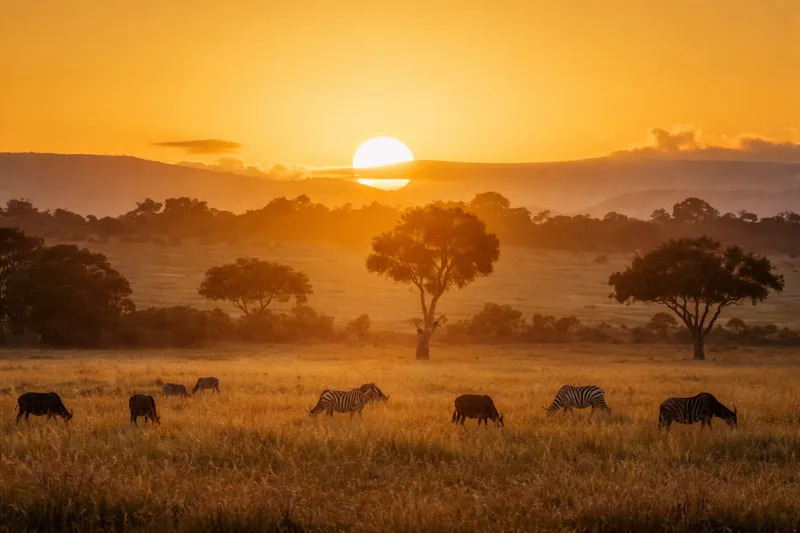
  • Masai giraffe, Grant's zebra, wildebeest, Coke's hartebeest, impala, gazelles
  • 549 bird species recorded — a recognised Important Bird Area
  • Pelicans, herons, crowned cranes, kingfishers, 47 raptor species
  • Flamingos and Egyptian geese during the green season
  • Note: rhino are not a reliable sighting inside the park
Logistics

Getting to Amboseli from Nairobi

Amboseli sits roughly 240 km southeast of Nairobi, and there are two ways to reach it.

By road

The classic Nairobi to Amboseli drive takes about 4–5 hours (around 240 km), typically via the Mombasa Road (A104) toward Emali, then on toward the park gates; some routes go via Namanga. Most of the route is smooth tarmac, with a bumpy, dusty final stretch. A 4x4 is strongly recommended.

By air

Several airlines — including AirKenya, Safarilink and Mombasa Air Safari — fly from Nairobi's Wilson Airport to Amboseli Airstrip in roughly 35–45 minutes, with several departures daily. Flying is ideal for short trips, or for travellers who want to avoid the bumpy road. Note the 15 kg baggage limit on light aircraft.

Main gates

The principal gates are Meshanani (west), Iremito (north), Kimana (east) and Kitirua/Kelunyet (southeast). Most visitors enter via Kimana Gate, which connects directly to the central safari circuit near the Serena and Ol Tukai lodges.

Can you do a day trip from Nairobi?

Yes — a day trip from Nairobi to Amboseli is possible but demanding: a long round trip of roughly 12–14 hours with an early (around 5:00 AM) start. It works if you're time-poor, but you'll spend more time in the vehicle than in the park. Wherever possible, plan at least one overnight — ideally two nights — to enjoy the magical dawn and dusk light when Kilimanjaro is most likely to be cloud-free and wildlife most active.

Entrance fees 2026

Amboseli National Park entrance fee — important: subject to change

Please treat this section as a guide and verify current rates before booking — Amboseli's entrance fee is the subject of an unresolved legal dispute.

On October 1, 2025, KWS implemented a new nationwide tariff under the Wildlife Conservation and Management (Access, Entry and Conservation) (Fees) Regulations, 2025. Amboseli was classified as a Premium Park, with the non-resident adult fee rising from USD 60 to USD 90 per person per 24 hours (child/student USD 45; African citizen USD 50; EAC citizen KES 1,500; Kenya resident KES 2,025).

Just one day later, on October 2, 2025, Justice John Chigiti of the Milimani High Court issued conservatory orders suspending enforcement of the new fees, following a petition by the Kenya Tourism Federation. The objection centred on the extremely short notice, not the principle of a fee increase.

Current status (mid-2026): No final court ruling resolving the case has been published. In practice, however, the USD 90 non-resident rate appears on the official KWS fee schedule and is what operators are charging for 2026. Budget for USD 90 per adult per day, confirm the rate with your operator or on the official KWS eCitizen portal before travel, and keep digital receipts. Payment is fully cashless — via the KWSPay/eCitizen portal, M-Pesa, Visa or Mastercard.

Book your Amboseli safari

Amboseli safari packages — live availability

A 6-day southern Kenya circuit combining Amboseli's elephants and Kilimanjaro views with the Rift Valley lakes and the Masai Mara. Check dates and current pricing:

Check live availability and prices on GetYourGuide. Pоwered by GetYourGuide.

Prefer a shorter trip or a different departure point? Browse all 15 Kenya safari tours →

Where to stay

Amboseli lodges, camps & accommodation

Amboseli accommodation falls into two broad categories: properties inside the national park itself, and camps on surrounding private conservancies and group ranches. Inside the park you're closest to the swamps and the elephant action, but activities are restricted to daytime game drives. Conservancy camps allow night drives and guided walking safaris, offer fewer crowds, and channel revenue directly to Maasai landowners — but usually add a separate conservancy fee.

Amboseli accommodation by category
Category Example properties Typical price (per person/night, all-incl.)* Best for
Ultra-luxury / conservancy Angama Amboseli (Kimana Sanctuary), Tortilis Camp (Kitirua), Tawi Lodge, Porini Amboseli (Selenkay), Campi ya Kanzi (Chyulu) ~USD 900–2,000+ Honeymoons, night drives & walks, exclusivity
Luxury / high-end Elewana Tortilis Camp, upper-tier suites at Angama ~USD 500–850 Photographers, discerning first-timers
Mid-range lodges Ol Tukai Lodge, Amboseli Serena Safari Lodge, Amboseli Sopa ~USD 250–500 Families, groups, classic in-park stays
Budget / tented / camping Kibo Safari Camp, Sentrim Amboseli, AA Lodge, KWS public campsites ~USD 100–250 (camping much less) Value seekers, self-drivers, overlanders

*Prices are broad 2026 indications and vary widely by season; conservancy rates typically include game drives, meals and often park/conservancy fees. Always confirm at time of booking. Several properties are famed for their Kilimanjaro views — for how to pick a mountain-view room, see our Kilimanjaro safari guide.

Worth adding to your itinerary

More Kenya safari experiences to explore

Amboseli's elephants are just the beginning. Whether you're pairing it with the Masai Mara's river crossings, Tsavo's vast red plains, flamingo flocks at Lake Nakuru or a Samburu wildlife drive in the northern frontier, browse experiences that fit your travel dates:

What to do

Things to do in Amboseli

Game drives

The heart of any Amboseli game drive is the swamp circuit, where elephants bathe and feed among the reeds. Dawn and late afternoon are the golden hours — for wildlife activity, and for catching Kilimanjaro before cloud builds over the summit.

Observation Hill

This cone-shaped hill is one of the very few places in Amboseli where you can leave your vehicle. Climb it on foot for a 360-degree panorama over the swamps, plains and — on a clear day — Kilimanjaro. The perfect spot to grasp the park's layout.

Guided walks & night drives

Not permitted inside the national park, but available on bordering conservancies — a superb way to experience the bush on foot or spot nocturnal species like genet, civet and African wildcat.

Balloon safari

A dawn hot-air balloon flight over the plains with Kilimanjaro on the horizon (around USD 450 per person) is an unforgettable perspective on the elephant herds and swamp landscape below.

Birdwatching & photography

With 549 recorded bird species and one of Kenya's premier photography compositions — elephants, acacia trees and Kilimanjaro — Amboseli rewards patience with extraordinary images.

Maasai cultural visits

Amboseli sits within Maasai land. A visit to a nearby village (typically USD 25 per person) offers an authentic window into Maasai customs, dance and daily life.

Timing your visit

Best time to visit Amboseli

Amboseli is a year-round destination, but the dry seasons deliver the best wildlife viewing and clearest Kilimanjaro views: June–October and January–February. During dry months, wildlife concentrates around the swamps, vegetation is thin, and skies are clear.

Best time to visit Amboseli by season
Period Season Conditions Verdict
June–OctoberLong dry seasonPeak wildlife around swamps; clear skies and Kilimanjaro; dusty; peak crowds & prices⭐ Best overall — book early
January–FebruaryShort dry spellClearest Kilimanjaro; calving season; strong predator action; fewer crowds; ~15–20% lower rates⭐ Best for photography & value
March–MayLong rains (green)Lush and green; muddy roads; mountain often cloudy; lowest pricesQuiet & scenic; excellent birding
November–DecemberShort rainsLush, migratory birds; occasional afternoon showers; festive-season price peaksGood-value shoulder season

This dry-season timing broadly mirrors the Masai Mara, which peaks July–October for the Great Migration — convenient for combining both parks. See our best time to visit Kenya guide for the full national picture.

Multi-park itineraries

Combining Amboseli with other parks

Amboseli pairs beautifully with Kenya's other headline destinations, and its compact nature makes it an efficient 2-night building block in a longer itinerary.

A typical crowd-pleasing itinerary runs Nairobi → Amboseli (2N) → fly to Masai Mara (2–3N) → Nairobi. The tours grid on our homepage includes several ready-made routes covering both parks.

Before you go

Practical info & travel tips

In the park

  • Expect dust: Amboseli lives up to its "salty dust" name — pack a scarf or buff and protect cameras and lenses.
  • 4x4 essential: roads are graded murram tracks; a 4WD Land Cruiser is ideal, especially in the wet months.
  • No fuel inside: refuel at Kimana or Namanga before entering the park.
  • Patchy connectivity: buy park tickets in advance via the KWS eCitizen portal; mobile networks can be unreliable.

Health & packing

  • Malaria zone: consult your doctor about prophylaxis and pack repellent and long sleeves for evenings.
  • Layers: early mornings and evenings can be cool, even in the dry season.
  • Conservancy fees: lodges outside the park boundary often add a separate community fee — factor this into your budget.
  • Compact and easy: Amboseli is a great choice for first-timers, families and short trips — short driving distances and very high elephant density.
Plan with confidence

Amboseli National Park FAQ

How much is the entrance fee for Amboseli National Park?

As of 2026, the non-resident adult fee is USD 90 per person per 24 hours (USD 45 for children/students), following the October 2025 KWS revision. The increase was legally challenged and temporarily suspended by the High Court, and the situation remains unresolved — but USD 90 is on the official schedule and what operators are charging. Always confirm the current rate on the KWS eCitizen portal before booking.

How far is Amboseli from Nairobi?

About 240 km southeast — a 4–5 hour drive via the Mombasa Road (A104) toward Emali, or a 35–45 minute flight from Wilson Airport on AirKenya, Safarilink or Mombasa Air Safari. Flying is strongly recommended for short trips or if you want to avoid the bumpy final stretch of road.

Can you see Kilimanjaro from Amboseli?

Yes — Amboseli offers the finest views of Mount Kilimanjaro anywhere. The peak is clearest at dawn and late afternoon in the dry seasons (June–October and January–February). Clouds build around the summit by midday. The mountain is in Tanzania, so you're viewing it across the border. For the full angle on timing, photography tips and viewpoints, see our Kilimanjaro safari guide.

How many elephants are in Amboseli?

The Amboseli Trust for Elephants reported 2,065 individually identified elephants at the end of 2025, boosted by a remarkable baby boom of more than 220 births in 2025. The Amboseli Elephant Research Project has tracked every elephant in the ecosystem since 1972 — the longest-running such study in the world. This is also one of the last refuges of the "super tusker" — bull elephants with tusks exceeding 100 lbs (45 kg).

Is Amboseli worth visiting?

Unreservedly yes. For elephants, Amboseli is unmatched anywhere in Africa — nowhere else can you watch such large, relaxed herds at close range, backed by the world's most detailed elephant research. Add the iconic Kilimanjaro backdrop, a compact and easy-to-explore layout, rich birdlife and authentic Maasai culture, and it earns its place on almost every Kenya itinerary.

Can I do a day trip to Amboseli from Nairobi?

Yes, but it's a long day — roughly 12–14 hours round trip with an early start of around 5:00 AM. It works if you're short on time, but you'll spend more time in the vehicle than in the park. At least one overnight is strongly recommended to enjoy the magical dawn light and the clearest Kilimanjaro conditions before cloud builds.

What is the best time to visit Amboseli?

The two dry seasons: June–October for the best overall game viewing and Kilimanjaro views, and January–February for photography, calving season and value (fewer crowds and 15–20% lower rates). These windows align with Kenya's peak safari season — see our best time to visit Kenya guide for the full national picture.

Amboseli vs Masai Mara — which is better?

They're different, not rivals. Amboseli is smaller, easier and unbeatable for elephants and Kilimanjaro scenery; the Masai Mara is larger, with far higher predator density and the July–October Great Migration. The ideal Kenya safari includes both — see our Masai Mara safari guide for help combining the two parks.