Kenya safari guide
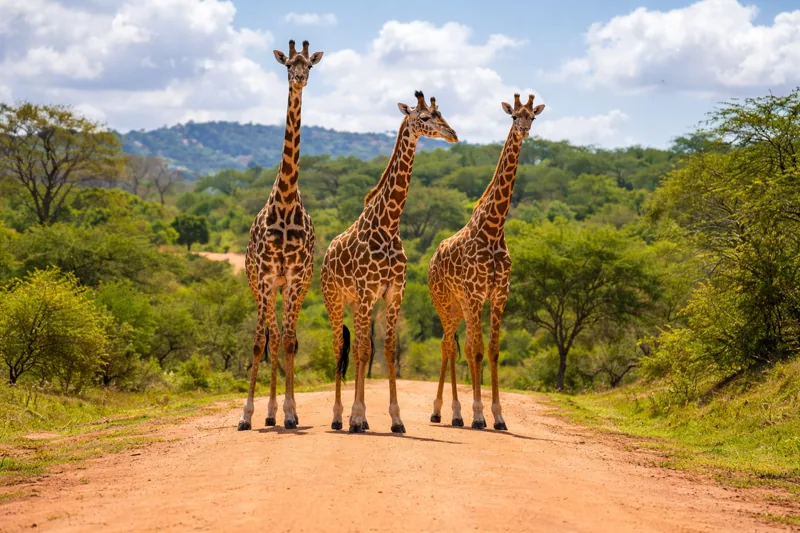
Kenya's Great Rift Valley at its best — rhinos and Rothschild's giraffe at Lake Nakuru, hippo boat rides at Lake Naivasha, cycling among wildlife at Hell's Gate. All within 3 hours of Nairobi. Your complete 2026 guide.
Key Takeaways
Lake Nakuru National Park lies about 140–160 km northwest of Nairobi (roughly a 2.5–3 hour drive) on the floor of the Great Rift Valley, right beside Nakuru — one of Kenya's largest cities. The park covers approximately 188 km² and centres on Lake Nakuru itself, a shallow alkaline (soda) lake at about 1,754 m above sea level. Conservation began in 1961 with a bird sanctuary to protect flamingos; the area was extended and gazetted as a national park in 1968. Unusually for Kenya, the entire park is fenced — primarily to protect rhinos from poachers — making it a reliable "refuge park" where wildlife sightings are dense and predictable. It is part of the UNESCO-listed Kenya Lake System of the Great Rift Valley (inscribed 2011) and protected under the Ramsar Convention.
For decades, Lake Nakuru was synonymous with flamingos. American ornithologist Roger Tory Peterson called it "the greatest bird spectacle on earth," and at its peak the lake hosted well over a million — sometimes two million — lesser flamingos, turning the shoreline into a shimmering pink carpet.
Lake Nakuru was declared Kenya's first rhino sanctuary in 1987. It's the only park in Kenya where you can reliably see both black rhino and white rhino in a single visit, with well over 100 animals now resident. White rhino sightings in particular are almost certain on a game drive of a few hours.
Don't miss the park's viewpoints — Baboon Cliff, Lion Hill and the Out of Africa viewpoint — offering sweeping panoramas across the lake to the Rift Valley escarpment.
Lake Nakuru is classified as a Premium Park under the KWS conservation fee schedule revised on 1 October 2025. Current published non-resident rates per adult per 24 hours: US$90 (child US$45). Lower rates apply for African citizens (US$50), Kenya residents (KES 2,025) and East African citizens (KES 1,500). Note: the 2025 fee increase was legally challenged by the Kenya Tourism Federation on 2 October 2025, and a High Court conservatory order was issued suspending enforcement — yet the US$90 rate has generally continued to be charged. No definitive final judgment had been confirmed by mid-2026. Always confirm the current fee via KWSPay/eCitizen before travelling. Fees are cashless; no cash at the gates.
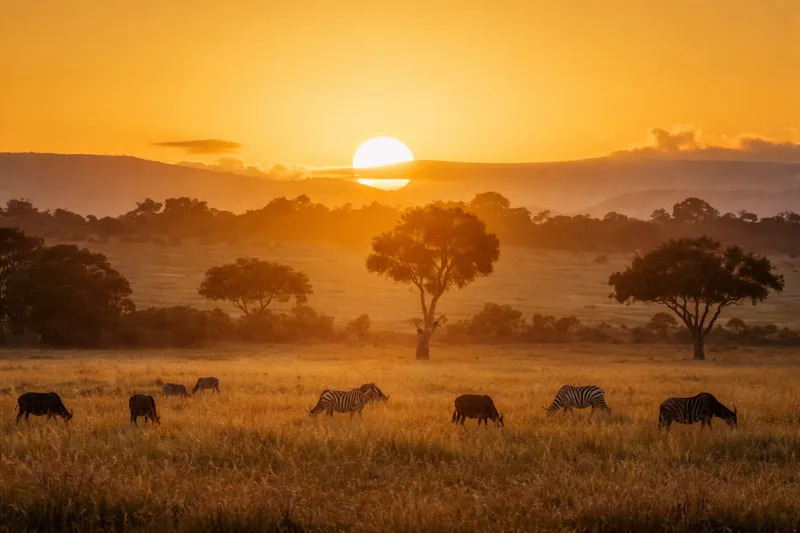
A 5-day private circuit from Nairobi covering the Masai Mara, Lake Nakuru and Lake Naivasha (including Hell's Gate cycling) — with all park fees included. Check live dates and current pricing:
Want to browse more Rift Valley and Mara combinations? See all 15 Kenya safari tours →
About 90 km northwest of Nairobi (1.5–2 hours by road), Lake Naivasha is a striking exception among the Rift Valley lakes: it is freshwater, while most neighbours are alkaline soda lakes. Sitting at roughly 1,880 m — the highest of the Rift Valley lakes — Naivasha covers around 139 km² and is fringed by papyrus swamps, acacia woodland and lush lawns. Its name comes from the Maasai Nai'posha, meaning "rough water," after the sudden storms that can whip across it.
There is no KWS gate fee to reach the lakeshore — you pay only for the specific activities and sanctuaries you choose. The area is also the heart of Kenya's cut-flower industry: the greenhouses ringing the lake produce roses and blooms flown to European markets within a day or two, contributing roughly 1.5% directly to Kenya's GDP.
The classic Naivasha experience. Motorboat trips (typically about an hour) take you close to the lake's estimated 1,500+ hippos, plus African fish eagles, pelicans, cormorants and kingfishers. Best at early morning (6:30–8:30 am) or late afternoon. Shared boats run roughly KES 1,000–1,500 per person; private charters KES 3,500–5,000. There are no crocodiles in the lake. Be off the water before dusk — hippos come ashore to graze at night.
Reached by a 10–15 minute boat ride, this private sanctuary lets you walk freely among giraffe, zebra, wildebeest, waterbuck and impala — no big predators, no vehicle or armed ranger required. Entry ~US$33 for non-resident adults (KES 800 for citizens). It was a filming location for Out of Africa.
The former lakeside home of Joy Adamson (of Born Free fame), now a conservation centre and museum. Visitors watch the Joy Adamson story, tour the memorabilia and enjoy the famous high tea in the gardens.
Fishing, birdwatching (over 400 species), horse riding and flower-farm visits round out the options. Evening sundowners on a lodge deck overlooking the water are a highlight.
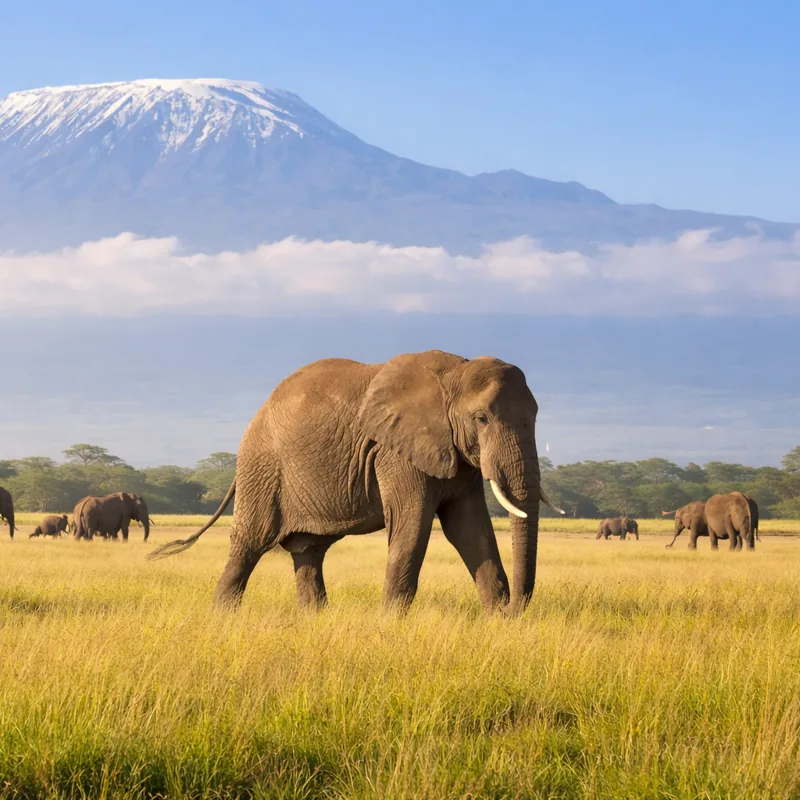
The Rift Valley lakes are the perfect complement to the Masai Mara's big cats and wildebeest migration, the elephant herds of Amboseli beneath Kilimanjaro, the vast red plains of Tsavo, or a full northern Kenya circuit through Samburu and Ol Pejeta. Browse what fits your dates:
Just south of Lake Naivasha lies Hell's Gate National Park, established in 1984 and covering about 68 km². It's famous for a simple reason: because it has almost no large predators (only the occasional leopard), you're allowed to explore it on foot, by bicycle or by rock climbing — no guide required on most of its roads and trails. One of the only places in East Africa where you can safari under your own steam among zebra, giraffe, buffalo, eland, warthog and baboon.
The signature experience — cycling the roughly 7 km from Elsa Gate through the dramatic valley toward the gorge, passing plains game. Bikes rent for around KES 800 per day near the gate. The park's striking landscape, including Fischer's Tower and Ol Njorowa Gorge, is widely credited as an inspiration for Disney's The Lion King scenery (animators visited in the early 1990s).
Ol Njorowa Gorge is a spectacular slot canyon of ochre rock walls, hot springs and steam vents — a guide is mandatory for this hike, and it closes after rain due to flash-flood risk. After the hike, soak in the naturally heated Olkaria Geothermal Spa — the Olkaria geothermal complex here generates around 963 MW, supplying roughly 47% of Kenya's electricity.
Hell's Gate fees (2026): Classified as a Scenic Park (Category B); non-resident adult entry around US$50 under the 2025/26 KWS schedule, plus a separate cycling fee (~US$10 for non-residents). Confirm current rates on KWSPay/eCitizen before travel.
| Lake Nakuru NP | Lake Naivasha | Hell's Gate NP | |
|---|---|---|---|
| Best for | Rhinos, giraffe, birds, scenery | Hippos, boat rides, relaxing | Cycling, hiking, gorge & climbing |
| Key activities | Game drives, viewpoints, birdwatching | Boat rides, Crescent Island, Elsamere | Cycling, walking, rock climbing, spa |
| Distance from Nairobi | ~140–160 km (2.5–3 hrs) | ~90 km (1.5–2 hrs) | ~90–120 km (2–3 hrs) |
| Guide required? | Yes (vehicle game drive) | Boat captain / island guide | No (gorge only) |
| Non-resident fee (2026) | USD 90 (Premium Park) | No lake gate fee | ~USD 50 (Scenic Park) |
| Predators? | Yes (lion, leopard) | No (Crescent Island predator-free) | Rare (occasional leopard) |
Both lakes are reached via the A104 Nairobi–Nakuru highway. Naivasha is closer at ~90 km (1.5–2 hours); Nakuru is further at ~140–160 km (2.5–3 hours). Ongoing roadworks around Rironi have been adding delays — allow extra time and try to clear Limuru before mid-morning. Both make excellent day trips from Nairobi, though an overnight stay is far more rewarding.
Nakuru and Naivasha are not directly on the main Nairobi–Mara road (which runs via Narok), but both combine beautifully into a Rift Valley safari circuit. Many popular itineraries run Nairobi → Lake Nakuru → Masai Mara (or vice versa). The Nakuru–Mara transfer is roughly 190–235 km and takes about 4–6 hours — best treated as a travel day.
A classic structure: 1 night at Nakuru + 1 night at Naivasha + 2–3 nights in the Mara over 4–6 days. See our Masai Mara safari guide for details on the Mara leg.
Both lakes are year-round destinations, but the dry seasons — roughly June–October and January–February — offer the easiest game viewing at Nakuru, the best boat-ride conditions at Naivasha, and clear skies. Wildlife concentrates around water in the dry months, while the wetter seasons (April–May long rains; November short rains) bring lush scenery, excellent birding and fewer crowds, but can make some Nakuru tracks and the Hell's Gate gorge difficult or closed.
For flamingos at Nakuru, there is no dependable season — their presence depends on water levels and algae rather than the calendar. For a fuller breakdown of Kenya's park seasons, see our best time to visit Kenya guide.
Expect roughly US$200+ per night for in-park lodges; camping and guesthouses are much cheaper. Always confirm whether park fees are included.
Yes, but not in the historic millions. Since rising water levels diluted the lake's alkalinity from around 2013, most flamingos have relocated to nearby soda lakes such as Lake Bogoria. Flamingos still visit Nakuru in fluctuating, unpredictable numbers — their presence depends on water levels and algae, not the calendar. Come primarily for the rhinos and Rothschild's giraffe, and treat any flamingos you see as a welcome bonus.
Absolutely — provided you go for the right reasons. It's the only park in Kenya where you can reliably see both black and white rhino in a single visit, plus endangered Rothschild's giraffe, lion, leopard and over 450 bird species in a beautiful Rift Valley setting. It's less worthwhile if you're expecting guaranteed mass flamingos — for that, Lake Bogoria is currently a better bet.
As of 2026, the non-resident adult fee is US$90 per 24 hours (US$45 for children) under the KWS Premium Park schedule. The October 2025 increase was legally challenged and temporarily suspended by the High Court, but the US$90 rate has generally continued to be charged. Always confirm the current fee via KWSPay/eCitizen before travelling. Fees are paid cashless; no cash at the gates.
About 140–160 km northwest — a 2.5–3 hour drive via the A104 Nairobi–Nakuru highway (currently longer during the Rironi roadworks; allow extra time). It's feasible as a long day trip, but an overnight stay is far more rewarding — day-trippers miss the prime early-morning and late-afternoon game-viewing hours.
About 90 km northwest of Nairobi — roughly 1.5–2 hours by road, making it one of the easiest safari-style getaways from the capital. A very popular Nairobi weekend destination, and a natural first stop on a longer Rift Valley circuit toward the Masai Mara.
Yes. Because Hell's Gate has almost no large predators, you can cycle and walk freely on the main roads and trails without a guide — one of the very few parks in Kenya (and Africa) where this is permitted. It's the park that inspired the scenery of Disney's The Lion King (animators visited in the early 1990s). A guide is mandatory only for the Ol Njorowa gorge hike, which can also close during and after rain due to flash-flood risk — always check at the gate first.
No. Swimming is not recommended: the lake has over 1,500 hippos (dangerous, especially near grazing routes at dawn and dusk) and carries a risk of the waterborne parasite bilharzia. Enjoy the lake by boat instead — the shared boat rides are excellent. If you want a soak, head to the naturally heated Olkaria Geothermal Spa at Hell's Gate.
Yes — although Nakuru isn't directly on the main Nairobi–Mara road, the two combine into a classic Rift Valley circuit. Expect a 4–6 hour transfer between them, best planned as a travel day. A typical trip is 1 night at Nakuru and 2–3 nights in the Mara. See our Masai Mara safari guide for details on the Mara leg.