Masai Mara planning guide
Choosing where to sleep in the Masai Mara matters almost as much as choosing to go. Inside the reserve, private conservancy or budget camp outside the gates — the three options answer completely different sets of priorities. Your complete 2026 guide.
Key Takeaways
A fully guided 4-day Masai Mara & Lake Nakuru safari from Nairobi — small group, Land Cruiser with pop-up roof, full-board accommodation, all game drives. The most-reviewed Kenya safari tour currently available. Check live dates:
Want to compare all 15 Kenya safari tours? Browse all tours → · For a breakdown of what different tours cost, see our Kenya safari cost guide.
The Greater Mara ecosystem is a patchwork of one public reserve and more than a dozen private conservancies. Where your camp sits determines what you pay, what you can do and how crowded your sightings will be.
The reserve is public land managed by the Narok County Government. Lodges here — from Governors' Camp on the Musiara Marsh to Keekorok Lodge and Mara Serena in the Mara Triangle — put you in the heart of the wildlife, often within striking distance of the Mara River crossing points.
North and east of the reserve, Maasai landowners have pooled their land into private conservancies leased to a limited number of camps. Key names: Olare Motorogi, Mara North, Mara Naboisho, Ol Kinyei, Lemek, Olderkesi, Ol Chorro, Enonkishu and Siana. Across Olare Motorogi's 35,000 acres, tourism is capped at 94 beds with one game-viewing vehicle per 2,100 acres — creating a dramatically more exclusive experience.
Clustered along the eastern edge of the reserve near the Sekenani, Talek and Oloolaimutia gates is a well-established network of budget tented camps on community land — by far the cheapest way to experience the Mara.
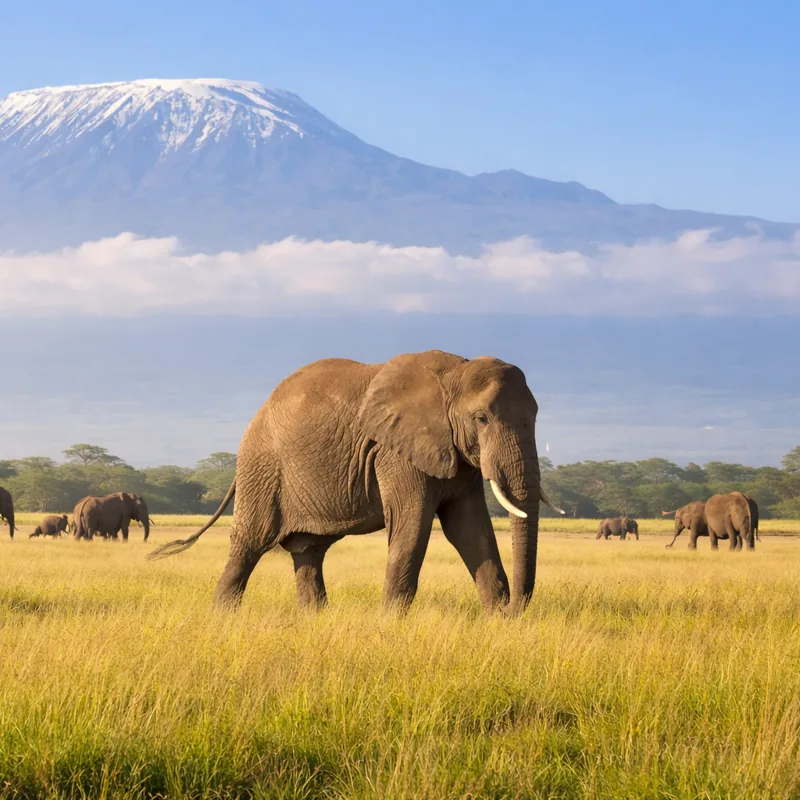
The Masai Mara is Kenya's most iconic destination, but it pairs brilliantly with Amboseli's Kilimanjaro elephants, Lake Nakuru's rhinos and Rift Valley scenery, Tsavo's red-dust plains, or a private conservancy circuit through Samburu and Ol Pejeta. Browse what fits your dates and budget:
| Factor | Inside the Reserve | Private Conservancy | Outside the Gates (Budget) |
|---|---|---|---|
| Land / management | Public, Narok County | Maasai-owned, leased to camps | Community land near gates |
| Nightly price (pp, all-in) | ~USD 150 (mid) to USD 3,500+ (ultra-luxury) | ~USD 350 to USD 3,100+ | ~USD 50–150 |
| Park / entry fee | USD 100 (Jan–Jun) / USD 200 (Jul–Dec) per adult/day | Conservancy fee ~USD 80–150 pp/night (usually included) | USD 100/200 per adult/day, every day you enter |
| Migration crossings | Best access — crossings happen here | Day trip required (extra reserve fee) | Access via daily drive in |
| Vehicle density | High, especially at crossings | Low — strict caps | High inside reserve during the day |
| Night drives | Not permitted | Yes | Not in reserve |
| Walking safaris | Not permitted | Yes | Not in reserve |
| Off-road driving | Not permitted | Yes | Not in reserve |
| Best for | Migration crossings, first-timers, all budgets | Exclusivity, photography, activities, honeymooners | Budget travellers, backpackers |
All prices are per person per night sharing, indicative — they move sharply with season and should always be confirmed at booking.
| Property | Location | What makes it notable |
|---|---|---|
| Angama Mara | Oloololo Escarpment, overlooking Mara Triangle | Owner-run clifftop lodge, 1,000 ft above the Mara Triangle; two camps of 15 glass-fronted suites; the "Out of Africa" film view. From ~USD 1,775 (standard) to USD 2,650 (peak) pp, all-inclusive of meals, drinks, drives and walks; park fees extra. |
| Mara Plains Camp | Olare Motorogi Conservancy | Great Plains Conservation's Relais & Châteaux; seven canvas suites, access to Olare Motorogi and Mara North; complimentary Canon photographic kit in each tent. |
| Mahali Mzuri | Olare Motorogi Conservancy | Sir Richard Branson's Virgin Limited Edition camp; 12 peaked-roof suites; refurbished and reopened June 2025; infinity pool over the migration valley. All-inclusive from ~USD 990 pp (low) rising steeply in peak. |
| &Beyond Bateleur Camp | Kichwa Tembo private concession, base of Oloololo Escarpment | Vintage-glamour camp; 18 tented suites in two intimate camps; private butler; night drives and walks on the concession. |
| The Ritz-Carlton Masai Mara Safari Camp | Inside reserve, on the Sand River near Tanzania border | Opened 15 August 2025; 20 treetop suites with plunge pools and butler service; all-inclusive from ~USD 3,500 pp/night. |
| Governors' Il Moran Camp | Musiara Sector, on the Mara River | The smallest, most exclusive Governors' camp; 10 tents; three drives a day; from ~USD 670 (green) to USD 1,590 (peak) pp/night. |
Note: many travellers search for a Four Seasons in the Masai Mara — there is no Four Seasons property in the Mara or anywhere in Kenya. The Four Seasons Safari Lodge Serengeti is in Tanzania. The closest equivalent brand-name five-star options in the Mara are the JW Marriott Masai Mara Lodge (opened 2023) and the Ritz-Carlton (opened 2025).
| Property | Location | What makes it notable |
|---|---|---|
| Governors' Camp (main) | Musiara Sector, inside reserve | The Mara's original permanent tented camp (1972); superb Marsh-Pride game viewing; from ~USD 453 (green) to USD 998 (peak) pp/night, up to three drives daily, house drinks included. |
| Little Governors' Camp | Musiara Sector, reached by boat across the Mara River | Intimate 17-tent sister camp overlooking a busy waterhole; Governors' balloon launch site. |
| &Beyond Kichwa Tembo Tented Camp | Private concession, western Mara | 40 tents at the foot of the escarpment; strong family facilities, balloon access, night drives and walks on concession. |
| Sanctuary Olonana | Private Mara River stretch (A&K Sanctuary) | 14 contemporary glass-fronted suites; excellent for couples and families. |
| JW Marriott Masai Mara Lodge | Inside reserve, on the Talek River | Opened 2023; 20 tents; five-star Marriott service; bookable with Bonvoy points; on-site photography editing suites. |
| Cottar's 1920s Safari Camp | Olderkesi Conservancy | Vintage 1920s-style camp run by one of Kenya's oldest safari families; conservancy exclusivity with night drives and walks. |
| Property | Location | What makes it notable |
|---|---|---|
| Mara Serena Safari Lodge | Hilltop in the Mara Triangle | Reliable 74-room lodge with Maasai-inspired architecture, pool and commanding plains views; ~USD 190 (green) to USD 495 (peak) pp/night full board. |
| Keekorok Lodge | Inside reserve (Sekenani sector) | The Mara's oldest lodge (1962), solid-walled rooms; ~USD 150–250 pp/night in low season. |
| Fig Tree Camp | Talek River, near reserve | 70+ tents on the river; well-located, family-friendly; ~USD 150 (low) to USD 320 (peak) pp/night full board. |
| Ashnil Mara Camp | On the Mara River | Contemporary tented camp, fenced, pool; ~USD 250–450 pp/night full board plus. |
| Sarova Mara Game Camp | Central reserve, near Sekenani | 75 tents, good game viewing from camp; ~USD 170 (green) to USD 380 (peak) pp/night. |
| Property | Location | What makes it notable |
|---|---|---|
| Kambu Mara Camp | ~4 km from Sekenani Gate | Well-run newer camp; comfortable beds, spacious tents, reliable Wi-Fi; from ~USD 50–86/night. |
| Oldarpoi Mara Camp | 2.6 km from Sekenani Gate | Closest budget camp to the gate — a real advantage at 5:45am; en-suite tents, unfenced with Maasai guards. |
| Miti Mingi Eco Camp | ~500 m from Oloolaimutia Gate | Eco-focused camp under a canopy of trees; 30 self-contained tents; from ~USD 35–72 pp/night. |
| Basecamp Explorer / Enchoro / Crocodile Camp | Talek / Oloolaimutia gate areas | Solar-powered, community-focused; simple but characterful, with good food and campfire nights. |
This is the Great Migration window, when between 1.3 and 2.5 million wildebeest (plus ~400,000 zebra and 300,000 gazelle) funnel north across the Mara River. Rates are at their highest — commonly 1.5× to 2× (sometimes 3×) the low-season figure at the same property. Reserve park fees also double from USD 100 to USD 200 per adult from 1 July. Top camps sell out far in advance. Book 6–12 months ahead; for the most in-demand crossing-season camps, 12–18 months.
The long rains bring lush landscapes, calving-season predators, short grass and far fewer vehicles. Discounts of 30–50% off peak are common; many camps run "stay 4, pay 3" or "stay 3, pay 2" offers. January–February is a widely recommended value sweet spot: excellent big-cat viewing, low dust and low crowds, without the rain. The resident Big Five are present year-round. See our best time to visit Kenya for the full seasonal breakdown.
Understanding inclusions is essential to comparing a "USD 350" camp with a "USD 1,500" one honestly.
Typically all-inclusive: accommodation, all meals, house and often premium drinks, twice- or thrice-daily game drives, laundry, Wi-Fi and airstrip transfers. Conservancy camps generally roll in the conservancy fee. Reserve park fees are usually extra even at luxury reserve camps, as are balloon safaris (~USD 450–500), premium champagnes and spa treatments.
Usually full board (all meals) with two shared game drives. Drinks, park fees and balloon rides are extra. Always confirm: a camp quoting $300/night excluding park fees and transfers can end up more expensive than one quoting $380 all-inclusive. See our Kenya safari cost guide for a detailed breakdown.
Typically full board but game drives, park fees, and sometimes even drinking water are charged separately. Always confirm exactly what a "budget" rate covers before comparing quotes — the gap between camps that quote inclusive vs exclusive can be $100+/night.
Stay inside the reserve or Mara Triangle, as close to the Mara River as you can afford. This is the one scenario where reserve location beats conservancy exclusivity. Allow at least 3–4 nights — crossings can't be scheduled. Best in August–September.
You must book a conservancy. Standouts: Olare Motorogi (lions, most exclusive), Naboisho (leopards, cheetahs, high big-cat density), Mara North (largest, good for migration herds), Ol Kinyei (smaller, more affordable, great walking).
Book a camp outside Sekenani or Talek gate; keep drives efficient by arriving early; consider the green season for the deepest discounts. You see the same Big Five as guests at the top camps.
There's no single best — it depends on your priority. For migration river crossings, stay inside the reserve or the Mara Triangle near the Mara River. For exclusivity, night drives and walking safaris, choose a private conservancy such as Olare Motorogi or Naboisho. For value, pick a budget camp outside Sekenani or Talek gate. Many experienced travellers split their stay between a conservancy and the reserve.
Inside the reserve you're closest to the crossings and pay daily park fees (USD 100–200 per adult), but you share sightings with more vehicles and cannot do night drives, walking safaris or off-road driving. A conservancy charges a separate fee (roughly USD 80–150 pp/night, usually bundled into the camp rate), limits vehicles for a far more exclusive experience, and permits night drives, walks and off-road driving — but you're farther from the reserve's river-crossing points.
Budget camps run about USD 50–150 per person per night; mid-range lodges roughly USD 150–450; luxury camps USD 700–1,500; and ultra-luxury properties USD 1,500 to USD 3,500+ per person per night. All prices are per person sharing. Rates commonly double in peak season (July–October). Park fees ($100–$200/day) are extra for properties inside the reserve. See our Kenya safari cost guide for a full breakdown.
Not inside the national reserve — night drives, walking safaris and off-road driving are all prohibited there. They are only available if you stay at a camp in a private conservancy such as Olare Motorogi, Mara North, Naboisho or Ol Kinyei. This is one of the primary reasons experienced safari-goers choose a conservancy stay over the reserve.
For its setting and service, most travellers who've been say yes. Angama Mara sits 1,000 feet up on the Oloololo Escarpment with the sweeping "Out of Africa" panorama, spacious glass-fronted suites, and consistently praised service. Standard-season rates start around USD 1,775 per person (rising to ~USD 2,650 in peak), all-inclusive of meals, drinks, drives and escarpment walks — park fees extra. The trade-off: it's about 30–45 minutes from the main Mara Triangle crossing points, so dedicated crossing-chasers sometimes prefer a camp right on the river.
There's no consensus winner — the most celebrated are Angama Mara (clifftop views, Out of Africa setting), Mara Plains Camp (conservancy exclusivity, loaned Canon photographic kit), Mahali Mzuri (Richard Branson's Virgin camp, infinity pool), &Beyond Bateleur Camp (vintage glamour) and the new Ritz-Carlton Masai Mara Safari Camp (opened August 2025, on the Sand River). The right one depends on whether you value views, activities, brand service or exclusivity.
For the July–October migration season, book 6–12 months ahead; for the most sought-after crossing-season camps, 12–18 months. For the green season (roughly January–June and November), 2–4 months is usually sufficient, and you'll often find discounted "stay 4, pay 3" deals. Festive-week dates (Christmas–New Year) also sell out well in advance.
Yes. A cluster of budget tented camps near the Sekenani, Talek and Oloolaimutia gates — including Kambu Mara Camp, Oldarpoi Mara Camp and Miti Mingi Eco Camp — offer en-suite tents and full board from roughly USD 40–150 per night. You'll drive into the reserve each morning and pay park fees per day, but you see exactly the same wildlife as guests at the top camps. For budgeting all of this together, see our Kenya safari cost guide.