Kenya safari guide
Kenya's largest wilderness — dust-red elephants, maneless lions, Mzima Springs and the world's biggest black rhino sanctuary. The classic bush-and-beach park between Nairobi and Mombasa. Your complete 2026 guide.
Key Takeaways
A 4-day safari from Mombasa covering Tsavo East, Amboseli and Tsavo West — the classic coast-to-park circuit with all park fees included. Check live dates and current pricing:
Starting from Nairobi instead? Browse all Tsavo safari packages →
Tsavo National Park was gazetted in April 1948 over a semi-arid landscape and divided into two management units the same year: Tsavo East and Tsavo West, separated by the A109 Nairobi–Mombasa highway and the parallel railway lines. Together they cover roughly 22,000 km² — one of the largest national parks in the world, accounting for around 4% of Kenya's entire land area. Add surrounding ranches, the Chyulu Hills and Tanzania's Mkomazi, and the wider Tsavo Conservation Area stretches across 40,000+ km².
Both parks are run by the Kenya Wildlife Service. The name "Tsavo" comes from the Tsavo River, which flows west to east through the ecosystem. Tsavo's position — almost exactly midway between Nairobi and Mombasa — is its defining advantage: the natural bridge between Kenya's inland safari circuit and its coastal beaches.
Tsavo also carries one of Africa's most famous wildlife stories. During construction of the Kenya–Uganda Railway in 1898, two maneless male lions — immortalised as "The Ghost and the Darkness" — killed dozens of railway workers over about nine months before being shot by Lieutenant-Colonel John Henry Patterson. The taxidermied lions are now on display at the Field Museum in Chicago. Tsavo's lions remain famous for their sparse or absent manes — an adaptation to the hot, arid, thorny terrain.
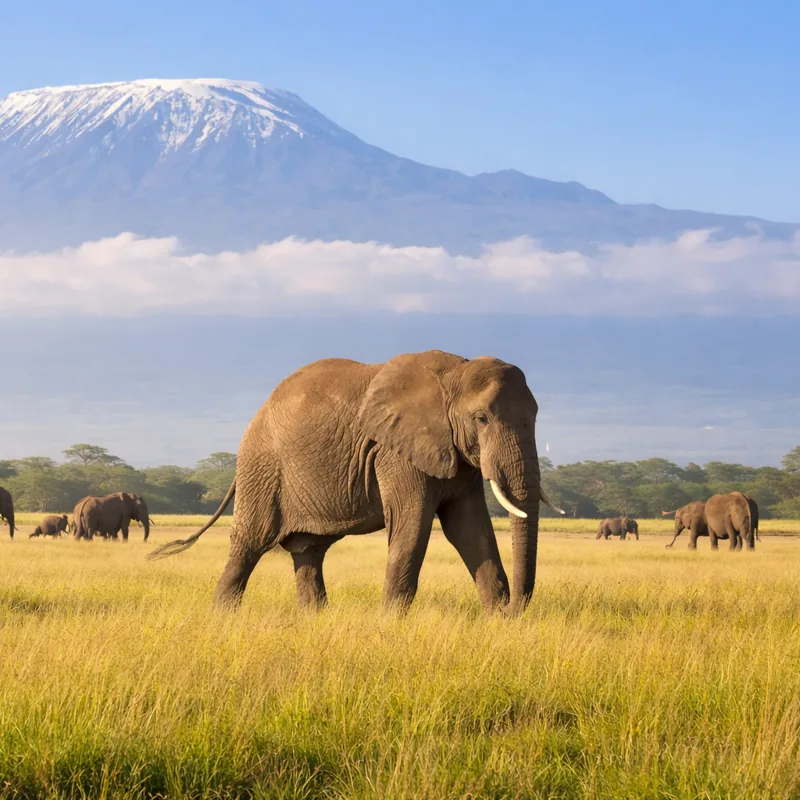
A Tsavo safari pairs beautifully with the elephant herds of Amboseli beneath Kilimanjaro, the wildebeest river crossings in the Masai Mara, rhino-spotting at Lake Nakuru, or a relaxed stay on Diani Beach after your bush days. Browse what's available on your dates:
Covering approximately 13,747 km², Tsavo East is the larger of the two parks — roughly nine times the size of the Masai Mara. Its landscape is semi-arid and largely flat: vast open plains of red earth, acacia scrub and grassland, cut by seasonal rivers. Only the southern third (south of the Galana River) is open to general tourism; the huge northern wilderness area is restricted, which keeps game-viewing areas uncrowded.
All Big Five are present, though black rhino are very hard to see here (rhino conservation concentrates in Tsavo West). Expect large elephant herds, maneless lions, cheetah, buffalo, Masai giraffe, zebra, and dry-country specials: gerenuk, fringe-eared oryx, lesser kudu and Somali ostrich. The critically endangered hirola antelope has its southernmost stronghold here. Over 500 bird species recorded, including the golden-breasted starling and vulturine guineafowl.
At around 9,065 km², Tsavo West offers far more varied, dramatic terrain than its eastern neighbour: volcanic hills and cones, lava flows, rocky escarpments, acacia woodland, springs and swamps, with the Chyulu Hills to the northwest and views of Mount Kilimanjaro to the south on clear days. Higher rainfall makes it greener; denser vegetation can make wildlife spotting more challenging, but the scenery and species diversity more than compensate. Tsavo West also has an excellent road network with more than 2,000 km of well-maintained roads.
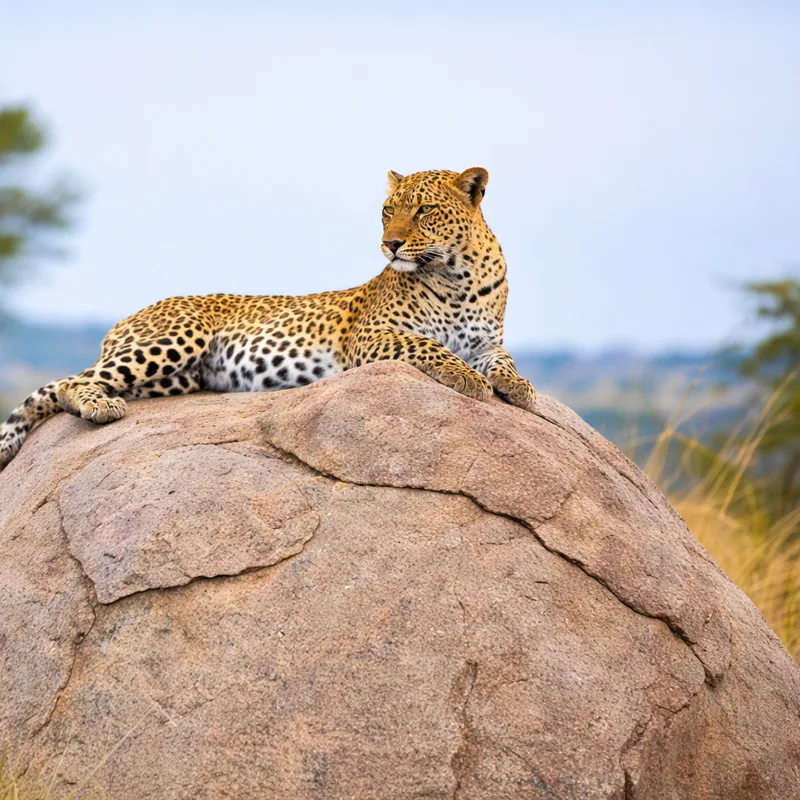
All Big Five, with better leopard terrain in the rocky areas and the best chance of black rhino in the Tsavo ecosystem. Elephant, hippo and crocodile at the springs; 600+ bird species recorded. Kilimanjaro views from Kilaguni Serena complement Amboseli's famous mountain backdrop — see our Kilimanjaro safari guide.
| Feature | Tsavo East | Tsavo West |
|---|---|---|
| Size | ~13,747 km² (larger) | ~9,065 km² |
| Landscape | Flat, open, semi-arid red-earth plains and scrub | Varied — volcanic hills, lava flows, springs, escarpments, greener bush |
| Signature sights | Red elephants, Yatta Plateau, Galana River, Lugard Falls, Mudanda Rock | Mzima Springs, Shetani Lava Flow, Rhino Sanctuary, Kilimanjaro views |
| Wildlife highlights | Huge red-elephant herds, maneless lions, cheetah, plains game | Black rhino, leopard, elephant, hippo & croc at Mzima, 600+ birds |
| Game-viewing ease | Easier — open terrain, sparse vegetation | More challenging — denser bush, but more scenic |
| Rhino | Rarely seen | Best chance in the ecosystem (3,200 km² Sanctuary) |
| Coast access | Very easy — 150–160 km from Mombasa | Slightly further — 3–4 hours from coast |
| Best for | First-timers, elephant lovers, coast add-ons, open-plains photography | Scenery lovers, birders, rhino, Amboseli/Kilimanjaro combos |
Tsavo's location on the Nairobi–Mombasa corridor makes it one of the easiest big parks to reach.
Tsavo West's Mtito Andei Gate is about 240 km (~4 hours) along the A109. Tsavo East via Voi is about 325 km (~5–6 hours). The Madaraka Express (SGR) train runs between Nairobi and Mombasa, stopping at Voi (~4 hours from Nairobi) and Mtito Andei — lodges arrange transfers from these stations.
This is Tsavo's biggest draw. Tsavo East's Bachuma and Voi gates are about 150–160 km (2.5–3.5 hours) from Mombasa; Tsavo West is roughly 3–4 hours. The SGR from Mombasa reaches Voi in about 2 hours.
Tsavo East: Mtito Andei, Manyani, Voi, Bachuma and Sala (Sala is handiest from Malindi/Watamu). Tsavo West: Mtito Andei, Chyulu (best from Amboseli), Tsavo River, Maktau, Jipe and Ziwani. By air, scheduled flights serve Voi, Aruba and Satao (East) and Kilaguni and Finch Hattons (West) from Nairobi Wilson (~50 minutes) and Mombasa. A 4×4 is strongly recommended for game drives.
| Lodge / Camp | Park | Style | Notable for |
|---|---|---|---|
| Ashnil Aruba Lodge | Tsavo East | Mid-range lodge | Superb Aruba Dam waterhole; constant wildlife action |
| Voi Safari Lodge | Tsavo East | Mid-range lodge | Elevated terrace with panoramic plains views |
| Satao Camp | Tsavo East | Luxury tented camp | Private waterhole drawing huge elephant numbers |
| Galdessa Camp | Tsavo East | Luxury / exclusive | Intimate riverfront on the Galana; conservation focus |
| Kilaguni Serena Safari Lodge | Tsavo West | Mid–upper lodge | First lodge ever built in a Kenyan park; waterhole, Chyulu & Kili views |
| Ngulia Safari Lodge | Tsavo West | Mid-range lodge | Ndawe escarpment near Rhino Sanctuary; famous bird migration trapping |
| Severin Safari Camp | Tsavo West | Luxury eco-camp | Solar-powered tented camp; spa; Kilimanjaro views |
| Finch Hattons | Tsavo West | Ultra-luxury tented | One of Africa's top camps; spring-fed pools; spa; "Out of Africa" glamour |
Rough guide: budget camping and bandas from ~US$30–120 per person per night; mid-range lodges such as Ashnil Aruba, Kilaguni Serena and Ngulia roughly US$150–350; luxury camps from several hundred dollars; ultra-luxury Finch Hattons from ~US$1,600+. Always confirm whether park fees are included. Rates vary widely by season.
Tsavo can be visited year-round, but the dry seasons — June to October and January to February — are best for wildlife viewing. During these months vegetation thins out, skies are clear, and animals concentrate around permanent water sources such as the Galana River, Aruba Dam and Mzima Springs, making them far easier to spot.
| Period | Conditions | Verdict |
|---|---|---|
| Jun–Oct | Dry; vegetation thin; animals at water; peak viewing; roads good | ⭐ Best overall — clear skies, concentrated wildlife |
| Jan–Feb | Dry spell; excellent photography; fewer crowds than peak | ⭐ Best for value and quiet; excellent game viewing |
| Mar–May | Long rains; lush scenery; lower prices; rougher roads; denser bush | Green season — great birding, best rates, some tracks difficult |
| Nov–Dec | Short rains; some afternoon showers; migratory birds present | Shoulder season — good value, excellent birding (migrants Nov–Apr) |
Because Tsavo is semi-arid, it generally receives less rain than many other Kenyan parks — a good choice on the shoulders of the rainy seasons. For the full national picture, see our best time to visit Kenya guide.
Tsavo's greatest strength is its position as the bridge between safari and beach.
Tsavo East is larger, flatter, drier and more open — best known for huge herds of red-dust elephants and easier game-viewing on its plains. Tsavo West is smaller but more scenic, with volcanic hills, lava flows, Mzima Springs and the world's largest black rhino sanctuary (3,200 km², expanded December 2025). They're separated by the Nairobi–Mombasa highway and are often combined in one trip. Neither is objectively "better" — the choice depends on your priorities.
Tsavo East is the closest major park to the coast — about 150–160 km (2.5–3.5 hours) by road from Mombasa (Bachuma and Voi gates). The SGR Madaraka Express train reaches Voi from Mombasa in around 2 hours. Tsavo West is a little further, roughly 3–4 hours from the coast, making it ideal for an Amboseli add-on.
Tsavo West's Mtito Andei Gate is about 240 km (around 4 hours) from Nairobi via the A109 highway. Tsavo East via Voi is about 325 km (5–6 hours). The Madaraka Express SGR train reaches Voi in about 4 hours from Nairobi, from where lodges arrange transfers.
Yes — this is Tsavo's defining advantage. Its position between Nairobi and the coast makes it the ideal "bush and beach" park. Many visitors do a 2–3 day Tsavo East safari from Mombasa or Diani Beach (roughly 2.5–3.5 hours away), either before or after relaxing on the Indian Ocean. Tsavo West is slightly further from the coast but pairs well with an Amboseli–Kilimanjaro extension. See our Amboseli guide for how to connect the southern circuit.
Under the 2025 KWS Wilderness Park schedule, non-resident adults pay US$80 per 24 hours (children US$40), with lower rates for East African citizens (KES 1,000) and residents (KES 1,350). Because these rates faced a legal challenge after their October 2025 rollout, always confirm the current fee on the official KWSPay/eCitizen platform before you travel. Fees are paid cashless (no cash at the gates).
The two dry seasons — June to October and January to February — are best, when wildlife gathers around water and vegetation is thin. The wetter months (March–May long rains; November short rains) bring lush scenery, lower prices and great birding but denser bush and rougher roads. Tsavo is a year-round destination and, because it's semi-arid, tends to receive less rain than the Masai Mara — a good shoulder-season choice.
Yes. On 9 December 2025 President Ruto officially opened the vastly expanded Tsavo West Rhino Sanctuary, now covering 3,200 km² — the largest rhino sanctuary in the world. It protects 200 black rhinos as a founder population, with the goal of reaching 2,000 rhinos by 2037. Tsavo West is now Kenya's premier destination for black rhino conservation, though sightings are never guaranteed as the animals are shy and largely nocturnal.