Plan your Kenya side
Kenya's parks for your itinerary
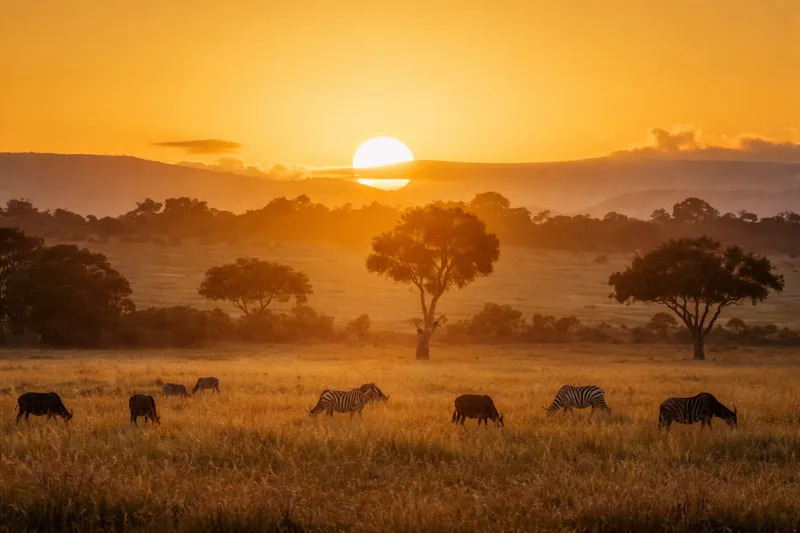
Whether Kenya is your sole destination or the first leg of a cross-border trip, these parks form the core of the Kenyan safari experience.
Kenya safari guide
An honest 2026 comparison — parks, cost, wildlife, visas, and how to combine both countries in one East Africa trip.
Key Takeaways
For most first-time safari-goers the honest answer is: choose Kenya for a shorter, more affordable, easier-to-organise trip with superb big-cat viewing and the famous Mara River crossings; choose Tanzania for vast remote wilderness, the Ngorongoro Crater, and a seamless Zanzibar finish — and if you have eight or more safari days, seriously consider combining both.
The Masai Mara (~1,510 km²) and the Serengeti (~14,750 km²) form one unbroken transboundary ecosystem — the same animals, two very different experiences. Kenya delivers density and convenience in a compact area; Tanzania delivers scale, remoteness and geological variety. Our curated multi-park Kenya safaris depart from Nairobi and include transfers, accommodation and game drives — check live availability below.
Whether you choose Kenya, Tanzania, or both, the region has more to offer than any single trip can cover. Travellers pairing countries often combine the Masai Mara's river crossings with the Serengeti's endless plains, add the Ngorongoro Crater's Big Five, and finish on the beaches of Zanzibar or Diani. Browse experiences that fit your dates:
| Factor | Kenya | Tanzania |
|---|---|---|
| Flagship parks | Masai Mara, Amboseli, Lake Nakuru, Samburu, Tsavo | Serengeti, Ngorongoro Crater, Tarangire, Lake Manyara |
| Signature park size | Masai Mara ~1,510 km² (compact) | Serengeti ~14,750 km² (about 10× the Mara) |
| Wildlife density | Very high in a small area; exceptional big cats; rhino in Mara Triangle & Nakuru | Excellent throughout; Ngorongoro near-guaranteed Big Five incl. rhino; classic plains game viewing |
| Non-resident park fees | Masai Mara USD 100/day (Jan–Jun), USD 200/day (Jul–Dec); premium parks ~USD 90/day | Serengeti ~USD 70–82/day + concession fees; Ngorongoro entry + ~USD 295/vehicle crater descent |
| Flights & access | Nairobi JKIA — East Africa's principal long-haul hub; many direct flights from Europe & Middle East | Kilimanjaro (JRO) — fewer direct long-haul options; often via Nairobi, Amsterdam, Doha or Addis |
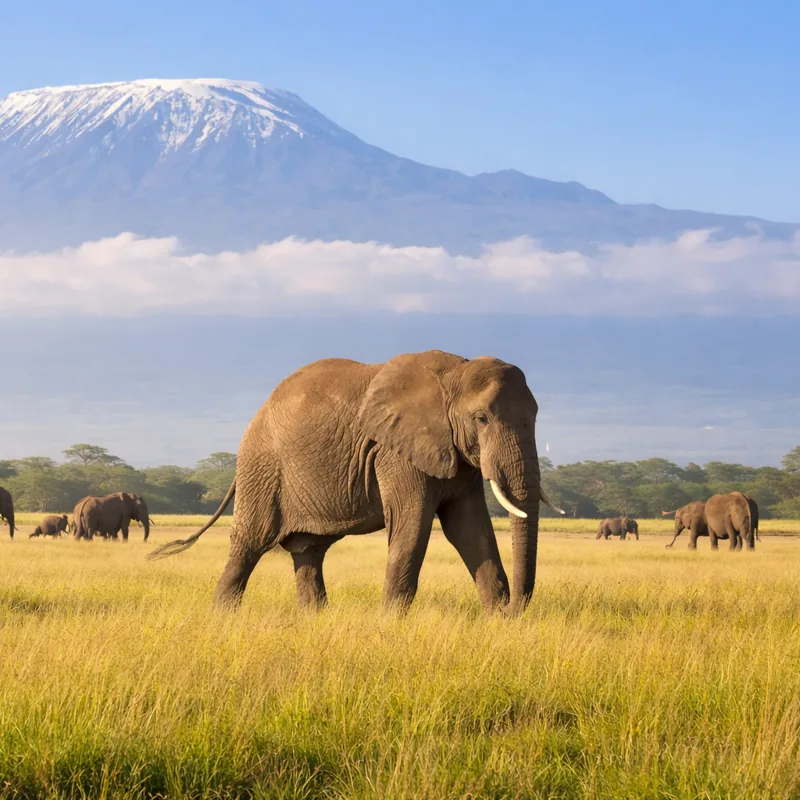
| Unique landscapes | Amboseli's Kilimanjaro-backed elephants; Mara rolling grasslands; compact private conservancies | Ngorongoro Crater caldera; Tarangire baobabs & elephants; Lake Manyara tree-climbing lions |
| Beach add-on | Diani, Watamu, Lamu (UNESCO) — excellent value | Zanzibar (Stone Town UNESCO, world-class diving) — globally iconic, seamless from Serengeti |
| Visa | Kenya eTA ~USD 30 (single entry, since Jan 2024) | Tanzania e-visa USD 50 (most nationalities) / USD 100 (US citizens, multiple-entry) |
The old rule — "Tanzania is always pricier" — is out of date. Kenya's Masai Mara non-resident entry is now USD 100/day (Jan–Jun) and USD 200/day (Jul–Dec) on a 12-hour ticket. The Kenya Wildlife Service also gazetted higher fees for its premium parks — Amboseli and Lake Nakuru at USD 90/day — effective October 2025 (currently the subject of an ongoing court challenge; budget for the new rates until further notice and confirm with your operator).
Tanzania's fees remain substantial: Serengeti entry runs roughly USD 70–82/day plus concession fees (~USD 59–70/person/night inside the park), and the Ngorongoro Crater descent attracts a separate service fee of around USD 295 per vehicle. Tanzania also requires 4×4 Land Cruisers where Kenya permits cheaper minibuses, nudging budget-safari costs up.
| Tier | Approx. daily cost (pp) |
|---|---|
| Budget / group joining | ~USD 180–250 per person per day |
| Mid-range lodge | ~USD 350–800 per person per day |
| Luxury / private | USD 850+ per person per day |
| Combined 10-day KE+TZ (mid-range) | ~USD 3,000–7,000 per person (before international flights) |
For a fuller breakdown by tour type and length, see our Kenya safari cost guide.
Both countries are full Big Five destinations and both share the wildebeest migration. The differences are in the details.
These tours depart from Nairobi, cover two or more parks, and bundle transfers, accommodation and game drives. A 7-day circuit is the perfect foundation before adding a Tanzania extension.
Prefer a ready-made route? See our Kenya safari itineraries for 3, 5, 7 and 10-day options.
Nairobi's Jomo Kenyatta International Airport (JKIA) is East Africa's principal hub, with year-round direct flights from London, Amsterdam, Paris and multiple Middle Eastern cities. The Masai Mara is about a 5–6 hour drive or a ~45-minute light-aircraft hop from Nairobi — easy to reach on even a short trip.
Most safari-goers fly into Kilimanjaro International Airport (JRO) near Arusha — commonly via Amsterdam (KLM), Doha (Qatar), Istanbul (Turkish), or a short hop from Nairobi. Internal distances are long and roads around Ngorongoro can be rough, so many travellers fly between parks.
Combining Kenya and Tanzania is well established. The Namanga border (Nairobi–Arusha road) is open 24/7; scheduled shuttles run daily, taking roughly 5–6 hours including formalities for around USD 25–35 one way. The Isebania/Sand River crossing connects the Mara directly with the Serengeti. Alternatively, Kenya Airways and Precision Air fly Nairobi–Kilimanjaro in about an hour.
This is the single most important practical detail for a combo trip. Both visas must be sorted before departure.
Kenya replaced its visa system with an Electronic Travel Authorization (eTA) in January 2024. Cost: approximately USD 30 (single entry, 90-day validity). Apply at etakenya.go.ke — allow at least a week. East African Community citizens are exempt.
Tanzania requires a separate e-visa: USD 50 for most nationalities, USD 100 (multiple-entry) for US passport holders. The East Africa Tourist Visa does not cover Tanzania — even if it covers Kenya, Uganda and Rwanda. Apply at immigration.go.tz.
| Months | Kenya (Mara) | Tanzania (Serengeti) |
|---|---|---|
| Jan–Mar | Good cats; quieter than peak; lower fees | Calving season (Ndutu) — intense predator action; lower prices |
| Apr–May | Long rains; lowest prices; some lodges close | Green season; herds moving north through central Serengeti |
| Jun | Drying out; herds building; good shoulder value | Grumeti River crossings; remote Western Corridor |
| Jul–Oct | Peak — Mara River crossings; all Big Five | Northern Serengeti crossings; best dry-season game viewing |
| Nov–Dec | Short rains; fewer crowds; good birding | Herds return south; short-grass plains fill up |
If the classic river-crossing spectacle is your priority, July–October works on either side of the border. For calving and value, aim for January–February in Tanzania's southern Serengeti. See our best time to visit Kenya guide for month-by-month detail.
For many travellers, the best answer to "Kenya or Tanzania" is "both." Because the Masai Mara and Serengeti are one ecosystem, a combined itinerary lets you experience the density and convenience of Kenya and the scale and variety of Tanzania in a single trip.
Who should combine? Travellers with 8+ safari days, a bucket-list mindset, and a mid-to-higher budget. If you have fewer than eight days, do one country well rather than rushing both — cross-border trips of 10–12 days can otherwise feel like constant packing and one-night stops.
See our Kenya safari itineraries for ready-made routes at every length, including cross-border options.
Whether Kenya is your sole destination or the first leg of a cross-border trip, these parks form the core of the Kenyan safari experience.
Neither is objectively better — they share the same wildlife and the same Great Migration. Kenya suits shorter, more affordable, logistically simpler trips with superb big cats and the Mara River crossings; Tanzania suits travellers wanting vast wilderness, the Ngorongoro Crater and a Zanzibar finish. For the definitive experience, combine both.
Historically Kenya was cheaper, but 2024–2026 fee increases have largely closed the gap. Kenya permits cheaper minibuses (Tanzania requires 4×4 Land Cruisers), which can make budget safaris slightly less expensive, but mid-range and luxury pricing is now broadly comparable. See our Kenya safari cost guide for current benchmarks.
Yes — it's one of the most popular East African itineraries. Combine the Masai Mara with the Serengeti and Ngorongoro over 10–14 days, crossing by road (Namanga or Isebania) or a short flight. Allow at least 8 days so it doesn't feel rushed. See our Kenya safari itineraries for sample routes.
Yes. You need a Kenya eTA (~USD 30) and a separate Tanzania e-visa (USD 50 or USD 100 for US citizens). The East Africa Tourist Visa does not cover Tanzania — every visitor to both countries needs both documents. Carry printed copies at the border.
July–October for the Mara River crossings and dry-season game viewing across both countries; January–February for Tanzania's calving season in the southern Serengeti and fewer crowds. See our best time to visit Kenya guide for month-by-month detail.
They're the same ecosystem. The Masai Mara (~1,510 km²) is compact, wildlife-dense and easy to reach from Nairobi; the Serengeti (~14,750 km²) is about ten times larger, more remote, and holds the migration for more of the year. River crossings occur on both sides depending on the month.
Whether you want a focused Kenya safari, a Tanzania northern-circuit adventure, or a seamless Kenya + Tanzania combo with a beach finish, browse our curated multi-park tours and check live availability for your dates.